

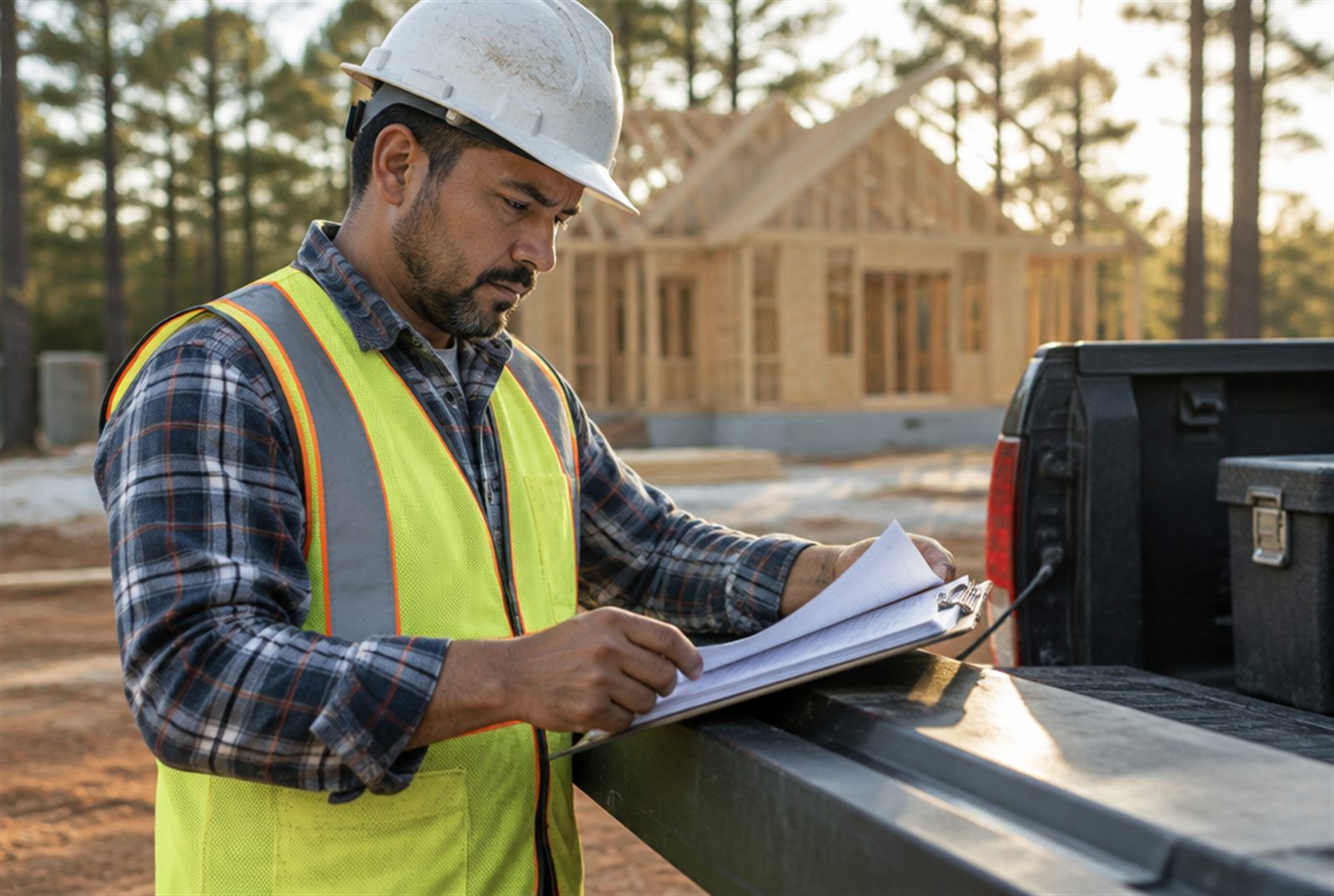
Contractors, builders and remodelers
Construction Accounting and Bookkeeping for Raleigh Contractors
Construction money is lumpy. Deposits land before the work, materials are paid before the draw, and a job can look profitable until the last invoice arrives. We keep contractor books by job, so you know which projects earn and which ones quietly eat the margin.
- Job costing with labor, materials and subs tracked per project
- Progress billing, retainage and deposits recorded correctly
- Subcontractor W-9s collected and 1099s filed
- Payroll for crews, including overtime
- Tax returns and planning that use contractor deductions
Call (919) 615-4208 or use the form. James, not a call center, answers.
Get my contractor books in order
Tell us a little about your situation. James Cox III, EA, replies within one business day.

Contractors do not lose money on the big jobs they can see. They lose it on the change order nobody billed, the sub who was paid twice, the deposit that got counted as profit, and the equipment that was never depreciated. Construction bookkeeping exists to catch those before the job closes.
Construction accounting services for Raleigh contractors
Accounting for contractors is bookkeeping with a job number on every line. Our contractor bookkeeping covers:
- Job costing: labor, materials, subs and overhead assigned to each project
- Progress billing, deposits and retainage recorded correctly
- Work-in-progress tracking for jobs that cross month and year end
- Subcontractor W-9s, lien waivers on file, 1099-NECs in January
- Crew payroll with overtime, and workers’ compensation reporting
- Equipment and vehicle depreciation planned, not discovered in April
- Sales and use tax on materials handled correctly for North Carolina
- Business and owner tax returns prepared by an Enrolled Agent
Job costing: the report that changes how you bid
A job cost report puts every dollar of a project in one place: estimated versus actual labor hours, materials, subcontractors, permits, equipment time and a share of overhead. Run it on every job for six months and patterns appear. Kitchens earn, decks do not. One sub always runs over. Change orders are being done but not billed. That is the information a bid should be built on, and it is what we deliver to contractor clients every month.
Cash versus accrual, and the methods that apply to contractors
Smaller contractors generally use the cash method for tax, which keeps things simple. Longer contracts and larger businesses may need the percentage-of-completion or completed-contract method, which changes when income is recognized and how work-in-progress is reported. James chooses the method that fits your size and keeps the books consistent with the return, so a lender, a bonding company and the IRS all see the same picture.
Subcontractors, 1099s and the W-9 habit
Every unincorporated sub paid $600 or more in a year gets a 1099-NEC, and the threshold rises to $2,000 for payments made in 2026. The pain is not the form; it is chasing addresses and tax ID numbers in January. We build the W-9 into your onboarding so it is collected before the first check, and we file the 1099s as part of payroll service.
Deductions contractors leave on the table
Vehicle use, tools and small equipment expensed in the year of purchase, bonus depreciation on larger equipment, the home office for owner-operators, the business share of phones and insurance, and job-site meals within the rules. None of these is exotic. All of them are missed when the books are reconstructed at tax time instead of kept through the year. See business tax preparation.
Behind on filings or facing a payroll tax notice?
Construction cash flow makes it easy to fall behind on payroll deposits or estimated taxes, and the IRS treats payroll balances seriously. James, as an Enrolled Agent, handles IRS resolution for contractors: unfiled years, trust fund penalties and levies, and an IRS payment plan for back payroll taxes, so the business keeps operating while the problem is worked out.
Get my contractor books in orderQuestions clients ask
What is job costing and why does it matter?
Job costing assigns every dollar of labor, materials, subcontractor cost and overhead to the specific project it belongs to. Without it, a contractor sees total revenue and total cost and cannot tell that the kitchen remodels are profitable and the decks are not. With it, you bid better and stop taking the wrong work.
Cash or accrual accounting for a construction business?
Most small contractors start on the cash method for tax, which is allowed below the IRS gross receipts threshold. Percentage-of-completion or completed-contract methods apply to longer contracts and larger businesses. James chooses the method that fits your size and keeps the books consistent with the return.
Do I have to send 1099s to my subcontractors?
Yes, a 1099-NEC to each unincorporated subcontractor paid $600 or more in a year (the threshold rises to $2,000 for payments made in 2026). Collecting the W-9 before the first payment is the habit that makes January painless, and we build it into your process.
What deductions do contractors commonly miss?
Vehicle and mileage, small tools and equipment under the expensing limits, depreciation on larger equipment, home office for owner-operators, and the portion of phone and insurance tied to the business. A clean set of books captures all of them as they happen.
Can you help if my books are a mess from a past bookkeeper?
Yes. Cleaning up construction books, especially mixed-up job costs and unreconciled deposits, is a regular part of onboarding new contractor clients.

The next step
Know what every job actually earned
Tell James what kind of work you do and how many jobs run at once. He will set up books that show profit by project, not just a bank balance.
4030 Wake Forest Rd, Ste 300, Raleigh, NC 27609Monday to Wednesday 9 am to 5 pm, Thursday 9 am to 1 pm. Closed Friday to Sunday.
James is an amazing person and accountant. He is very patient and kind. He has done our taxes for 10 years and we've had all the changes and extras.